Radon Mitigation
Certified radon testing and mitigation to protect your Huntsville and Nashville family from a silent, invisible health threat.
Get My Free EstimateTrusted Radon Mitigation Across Middle Tennessee & North Alabama
Radon is a colorless, odorless, radioactive gas produced by the natural breakdown of uranium in the soil. Because it is heavier than air, it settles into low-lying spaces like basements and crawl spaces, seeping into your home through foundation cracks, gaps around pipes, and other hidden pathways where it becomes trapped and concentrated. You cannot see it, smell it, or taste it, which is exactly what makes it so dangerous.
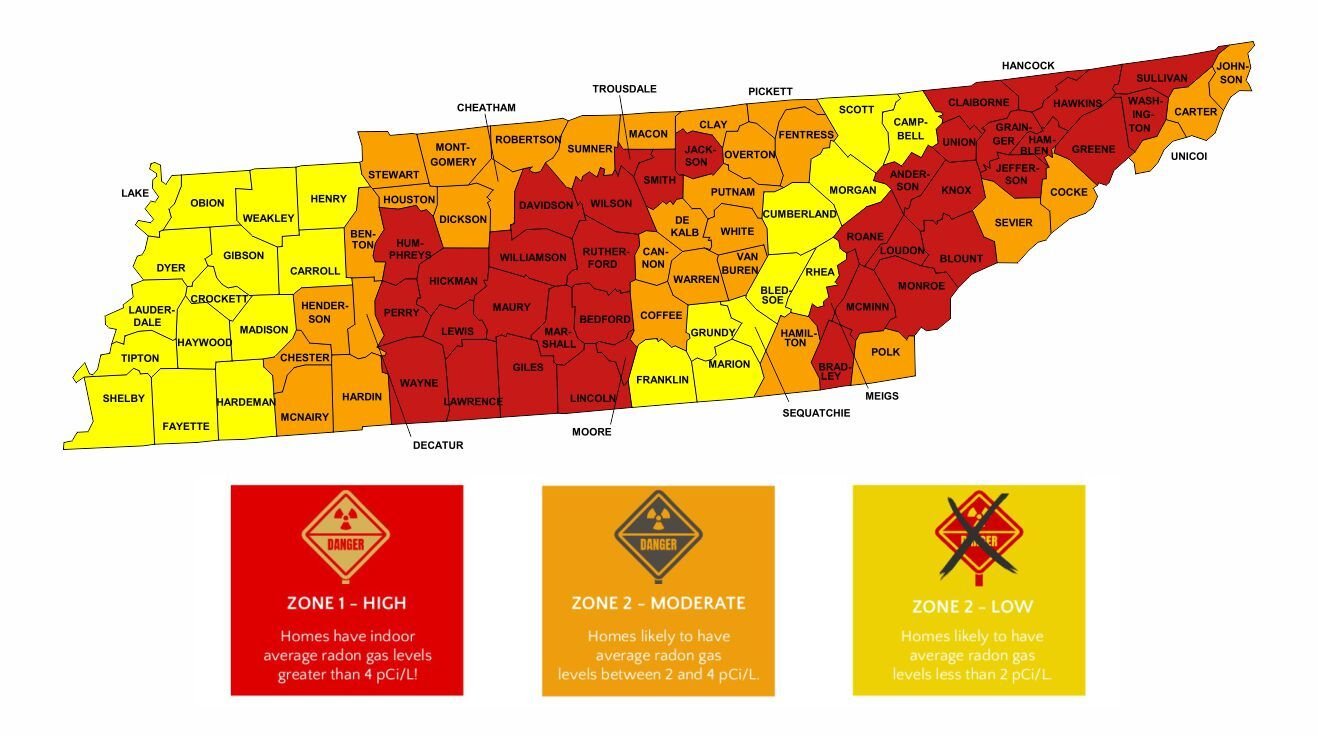
The U.S. Environmental Protection Agency (EPA) identifies much of Middle Tennessee and North Alabama as high-probability areas for elevated radon, with some of the highest readings found in Davidson, Williamson, Rutherford, Wilson, Maury and Smith Counties, as well as the Huntsville, Madison, Decatur and Athens region. At Warner Foundation Services, our certified team helps you find out exactly where you stand and, if needed, installs a proven radon reduction system, all backed by our honest, no-pressure process and 25-year workmanship warranty.
Why Radon Should Be Taken Seriously
- Roughly 1 in 15 homes has elevated radon levels
- Radon is the #1 cause of lung cancer among non-smokers
- It is the 2nd leading cause of lung cancer overall, behind smoking
- The EPA links radon to about 21,000 lung-cancer deaths every year
- Middle Tennessee & North Alabama sit in EPA-designated high-radon zones
- Two identical homes side by side can measure very different radon levels
Radon Testing
The only way to know your home's radon level is to test for it, and no two homes are alike. Two houses built by the same crew, side by side, can measure completely different levels, so a neighbor's "safe" result tells you nothing about your own home. Testing is simple, affordable, and can genuinely save a life.
A short-term test (a minimum of 48 hours) gives you a quick read on whether a problem may exist and is ideal for real-estate timelines. A long-term test of 90 days or more delivers the most accurate picture of your home's yearly average because it accounts for the variables that influence radon, including barometric pressure, rain-soaked soil, high winds, snow cover, and heating and cooling cycles. To keep the process unbiased and protect you as the consumer, Warner Foundation Services partners with a leading, certified Middle Tennessee home-inspection team for testing, so the company measuring your radon is never the one selling you a system.
If your levels come back high, don't panic. Radon exposure is cumulative, meaning the risk builds over years rather than overnight, and the vast majority of radon problems can be corrected quickly, painlessly, and at a very reasonable cost.
Radon Mitigation & Reduction Systems
Radon mitigation (also called radon remediation) is any method used to reduce the amount of radon in the air you breathe indoors. The goal is simple: lower your home's radon to the safest level possible. The right system depends heavily on the design and condition of your foundation and on how permeable the soil or gravel beneath it is, and those two factors drive both the complexity and the cost.
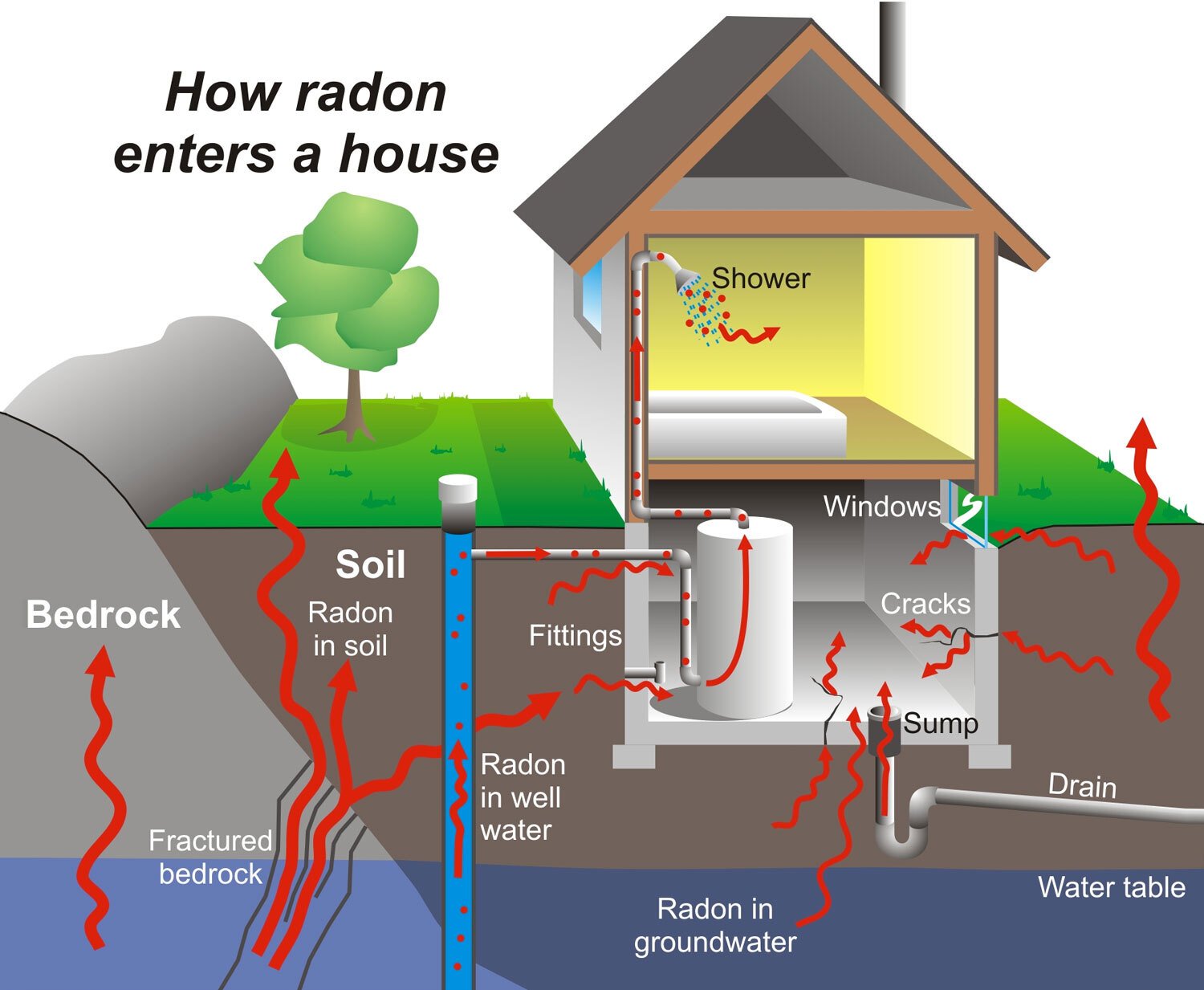
Most systems work by creating a vacuum beneath your foundation that draws radon-rich air out and vents it safely above the roofline, where it disperses harmlessly instead of collecting under your home. A sealed "suction point" is created so a PVC pipe can pass through the foundation into the ground, and an exterior radon fan runs continuously to pull the gas up and out. Permeable soil often needs just one suction point, while dense clay may require more.
- Active sub-slab depressurization for basements and concrete slabs
- Active sub-membrane depressurization for crawl spaces
- Sealed suction points with properly routed PVC venting
- Exterior radon fans that exhaust safely above the roofline
- Post-installation testing to confirm your levels are safe
- Up to 99% radon reduction with a correctly designed system
For crawl spaces we use an active sub-membrane system: a high-density vapor barrier is laid over the soil or gravel, and a PVC pipe pulls radon from beneath the sheeting to vent it outdoors, the same proven principle as a sub-slab system adapted to your crawl space.
Crawl Space Vapor Barrier
Just because you can't see the moisture or gas in your crawl space doesn't mean it isn't harming your home and your family. Open crawl-space vents pull humid outside air in, especially in summer, where it condenses on pipes, walls, and framing. That trapped moisture feeds mold and mildew, attracts pests like termites, spiders, and rodents, and slowly rots wooden beams and joists while eroding your foundation over time. Soil gases such as radon and methane migrate up through the same gravel and dirt, becoming far more dangerous once they are concentrated indoors.
A properly installed crawl space vapor barrier changes all of that. By sealing out ground moisture and outside air, it eases the load on your HVAC system, blocks allergens and mold spores from reaching your ductwork, and helps keep the air upstairs cleaner. Just as importantly, it acts as a barrier against soil gases, dramatically slowing the rate at which radon and methane can enter your home and, paired with proper venting, redirecting them safely to the exterior.